




Berkshire Museum | Massachusetts
A very curious place to pour a floor.

THE MUSEUM OF JUST ABOUT EVERYTHING
Forty thousand objects. Not much in common.
When Zenas Crane founded the Berkshire Museum in 1903, he borrowed inspiration from three very different institutions: the Smithsonian, the Metropolitan Museum of Art, and the American Museum of Natural History.
The collection includes dinosaur fossils, fine art, ancient artifacts, taxidermy, and minerals that glow in the dark.
For StudioHAU, the challenge was giving these wildly different collections room to exist within a cohesive architectural design.
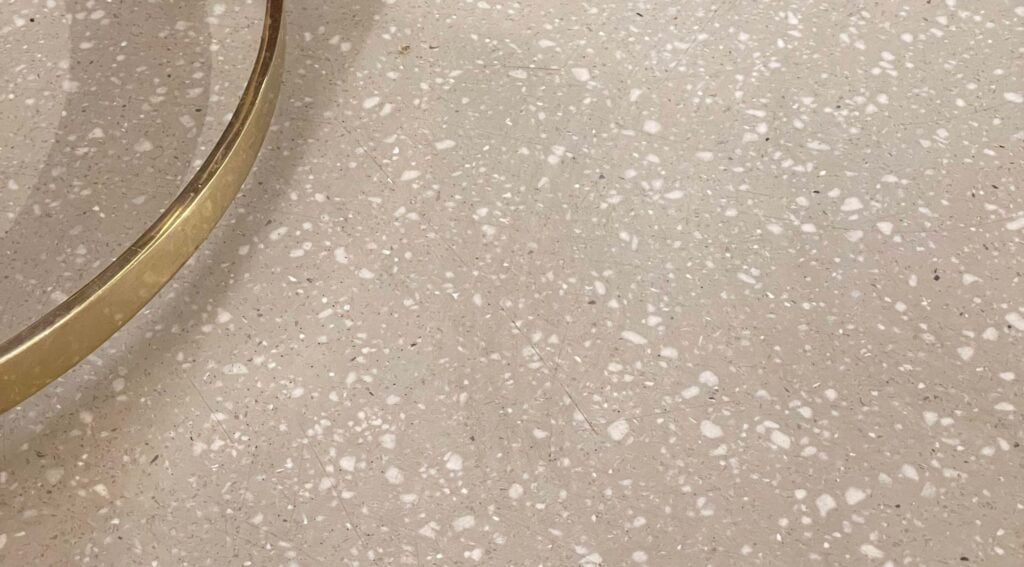
Senso’s seamless flooring provides a consistent material foundation as the galleries change in color, scale, and character. The displays can be dramatic, intimate, colorful, or wonderfully strange without the floor introducing another competing pattern.
A floor doesn’t need to compete with a dinosaur skeleton to be interesting.
THE JOURNEY BETWEEN EXHIBITS
A good museum makes you want to see what’s in the next room.
StudioHAU’s renovation encompasses more than 18,000 square feet, opening new connections between galleries while preserving the historic building’s underlying geometry.
Architectural portals frame the transitions, offering glimpses of what lies ahead. From one doorway, visitors can see through several rooms, each revealing something different.
Senso’s poured application works with that spatial arrangement.
Unlike manufactured tiles or planks, the surface doesn’t introduce a repeating grid or fixed dimensions that determine where the floor’s visual divisions fall.
The architects could preserve the clarity of those long sightlines, with Senso creating a continuous finish across the redesigned gallery spaces.
THE AQUARIUM GETS A PROMOTION
After forty years in the basement, the fish have moved upstairs.
The Feigenbaum Aquarium has long been one of the Berkshire Museum’s most popular attractions. StudioHAU gave it an entirely new position in the building.
Relocated to the main floor and expanded to nearly twice its former size, the aquarium now occupies a central place in the visitor experience.
Floor-to-ceiling tanks, angular passages, and an illuminated glass walkway create an underwater environment that feels strikingly different from the galleries beyond.
The shift in atmosphere is dramatic. Visitors move from brightly lit collections of art and natural history into an immersive blue world, then return to the museum’s exhibition spaces.
For Senso, that contrast speaks to the larger challenge of the renovation: creating a consistent architectural foundation for a museum whose spaces can look and feel entirely different. The seamless flooring in the surrounding galleries provides that continuity, while the aquarium is free to be a world of its own.
THE COLLECTION WON’T SIT STILL
Today’s exhibition is tomorrow’s empty room.
One of StudioHAU’s most distinctive additions is the Cabinets of Curiosities gallery, featuring five types of custom stained-wood cabinetry designed to accommodate artifacts, interactive displays, and drawers visitors can open.
The exhibits are designed to rotate. Objects will move, installations will change, and the museum will continually find new ways to present its collection.
Senso’s poured flooring provides a surface independent of any one exhibition arrangement. Displays can be repositioned without an underlying tile or plank pattern dictating the composition.
It also has a practical job. Museum galleries accommodate school groups, families, moving displays, and the daily work of maintaining a public institution.
Senso’s smooth, joint-free finish eliminates conventional grout lines and provides a cleanable surface for the activity taking place above it.
NATURAL HISTORY, UNDERFOOT
The museum studies the natural world. Its new floor begins with plants.
In December 2025, the Berkshire Museum shared a time-lapse of Senso being poured across its renovated first floor.
Senso develops its flooring using plant-derived biopolymers as an alternative to conventional petroleum-based resin binders, combining material innovation with the freedom of a poured architectural finish.
For a museum housing prehistoric fossils, living ecosystems, and an extraordinary collection of natural specimens, the materials used in its renovation become part of the architectural story.
Senso brings that consideration to one of the building’s most extensively used surfaces.
SENSO IN THE WORLD
No two visions are alike and neither should their floors be.
The world’s most distinctive spaces begin with very different ambitions.
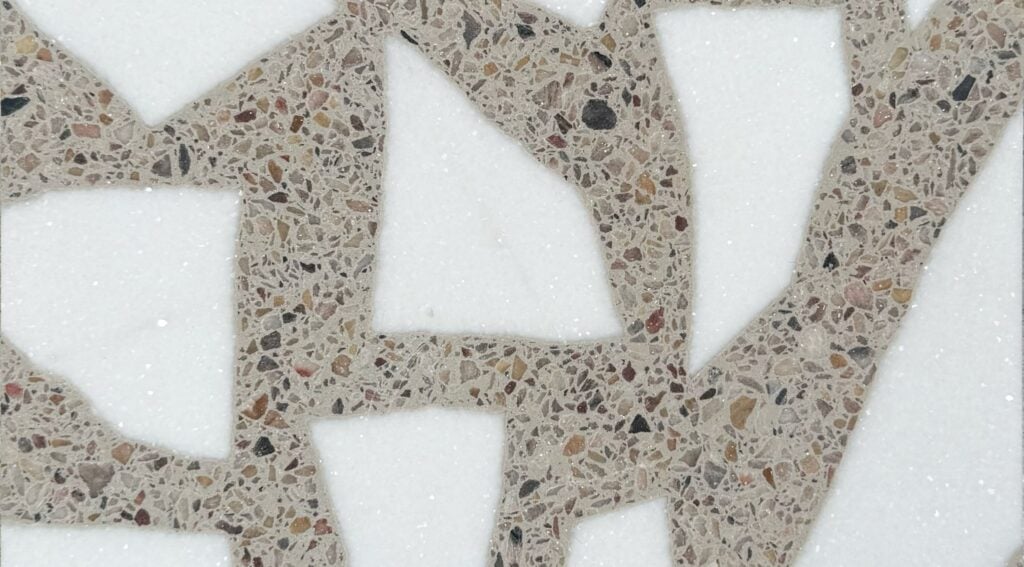
Senso works with architects, designers, and leading brands to develop surfaces around the identity and demands of each project. Color, texture, composition, and finish become part of the creative process.
Every space gets something of its own.
Unmistakably yours. Unmistakably Senso.